Valentine.gr/The Greek Flowers Portal
 

flaglogo-gr.bmp (910 bytes)  

Unitedkingdom_sm.gif (528 bytes)  

Welcome To The Greek Flowers Portal

Home   Info   Contact


Join Valentine mailing list!
Enter your email address below,
then click the 'Join List' button:


ADVERTISEMENT...


  LINK OF THE MONTH

Valentine.gr  

December 2007

Did you know that the original Christmas cactus are epiphytes growing in the forks of trees at tropical rainforest in the Organ Mountains north of Rio de Janeiro in southeast Brazil?

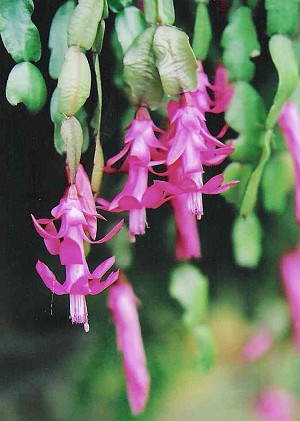
 Christmas Cactus (Schlumbergera truncata) 

Christmas Cactus - Schlumbergera Spp.

Schlumbergera is a genus of 6 known tree-dwelling cacti from Brazil. These are the tropical rainforest epiphytes, growing on tree branches where, despite the high rainfall, water drains off quickly so that "dry" conditions prevail much of the time. Not surprisingly these cacti are quite different in appearance to their desert dwelling cousins. They are named after the French Frederic Schlumberger who was the owner of a famous plant collection.

This genus contains the popular Schlumbergera truncata, also known as Christmas Cactus which may flower in white, pink, red or purple. The Easter Cactus or Whitsun cactus (Hatiora gaertneri) which produces vivid scarlet flowers belongs to Hatiora genus.

The stems of Schlumbergera resemble leaf like pads joined one to the other and the flowers appear from areoles at the tips. In addition, the plant is diurnal and will close up its flowers at night.

The common holiday cacti (Thanksgiving Cactus, Christmas Cactus, Easter Cactus) are composed of several closely related species in the genus Schlumbergera (often called "Zygocactus" in older works). They are originally forest cacti, growing as epiphytes at elevations between 1000 and 1700 meters above sea level (3280 to 5575 feet above sea level) in the Organ Mountains north of Rio de Janeiro in southeast Brazil, South America (not to be confused with the Organ Mountains of New Mexico in the United States of America). They are called "Flor de maio" (May Flower) in Brazil.

Many modern holiday cactus cultivars are hybrids between Schlumbergera truncata and Schlumbergera russelliana, first bred about 150 years ago in England.

Schlumbergera plants have a wide flat green stem that look like leaves and produce colorful flowers. The flowers come in a wide variety of colors, red, purple, peach, orange, pinks and creams. 

The green, flattened, leaf-like structures that make up the majority of a Christmas Cactus are actually modified stem segments called cladodes. A cladode is a stem modified for photosynthesis that looks like a leaf. It is flat for increasing the surface area, thick for storing water and green for photosynthesis. In most cacti, the leaves have been modified into spines which have many different functions for the plant. In the Christmas Cactus, the leaves and spines are absent. 

The Christmas cactus history sheds light on how this plant became such an integral part of Christmas festivities. Pine and fir trees are evergreens and are normally found in cold climates. The cold and harsh winter conditions dull the spirit of many and an evergreen bough or tree warmly decorated puts the mind on a more cheerful frame. But there are several countries where pine and fir trees are not available. So the custom of decorating the Christmas cactus as Christmas tree came into being. We find this tradition in the dry and hot places. Africa, Australia, some of the Latin American countries has Christmas cactus for their Christmas tree. The tree is decorated just like pine or fir trees, but there are local or rather, native flowers or any other decorative items. 


Source:

http://en.wikipedia.org/wiki/Schlumbergera
http://en.wikipedia.org/wiki/Christmas_Cactus
http://www.theflowerexpert.com/content/giftflowers/
flowersandoccassions/christmas-cactus
http://www.christmascarnivals.com/
christmas-history/christmas-cactus-history.html

 

  LINK OF THE MONTH


Mickey Mouse bush - Ochna serrulata
Cow's Udder - Solanum mammosum
Miracle fruit - Synsepalum dulcificum
Akebia - Akebia quinata
Chilean Firebush - Embothrium coccineum
Caesalpinia - Caesalpinia pulcherrima
Welwitschia - Welwitschia mirabilis
Saguaro - Carnegiea gigantea
Schisandra - Schisandra chinensis
Monarda - Bee balm - Bergamot
Tamarind - Tamarindus indica
Neomarica - Walking Iris
Red hot poker - Kniphofia - Tritoma
Sikkim rhubarb - Rheum nobile
Reseda - Mignonette
Paulownia - Paulownia tomentosa
Belamcanda chinensis - Leopard lily
Blue Poppy - Meconopsis
Cannonball Tree - Couroupita guianensis
Tamarillo - Cyphomandra betacea
Goji - Wolfberry - Lycium barbarum
Vanilla - Vanilla Planifolia
Stevia - Stevia rebaudiana
Pachypodium
Physalis
Ceropegia
Sturt pea - Swainsona formosa
Clematis
Grevillea
Jade vine - Strongylodon macrobotrys
Sansevieria - Snake Plant
Trochetia
Yareta - Azorella compacta
African tulip tree - Spathodea campanulata
Angel's Trumpets - Brugmansia
Achiote - Annato - Bixa orellana
Sausage Tree - Kigelia pinnata
Castor Oil Plant - Ricinus communis
Firewheel Tree - Stenocarpus sinuatus
Bat Flower - Tacca
Snake gourd - Trichosanthes cucumerina
Sedum
Hydnora - Hydnora africana
Pickerel Weed - Pontederia
Argan - Argania spinosa
Astilbe - False Goats Beard
Feijoa - Pineapple Guava - Acca sellowiana
Aquilegia - Columbine
Cassiope
Sweet Box - Sarcococca
Christmas Cactus - Schlumbergera
Foxtail Lily - Eremurus
Rue - Ruta graveolens
Pittosporum
Ylang-Ylang - Cananga odorata
Rose of Jericho - Anastatica hierochuntica
Gunnera
Waterlily - Nymphaea
Calico Flower - Aristolochia
Daylily - Hemerocallis
Contorted hazel - Corylus avellana Contorta
Torch Ginger - Etlingera elatior
Mistletoe - Viscum album
Devil´s claw - Harpagophytum procumbens
Teasel - Dipsacus
Pampas grass - Gynerium argenteum - Cortaderia Selloanna
Purple coneflower - Echinacea purpurea
Coral Tree - Erythrina crista-galli
Portulaca
Lobelia
Field Poppy - Papaver Rhoeas
Narcissus - Daffodil
Mimosa pudica - Sensitive Plant
Boxwood - Buxus sempervirens
Firethorn - Pyracantha
Star of Bethlehem - Ornithogalum
Cosmos
Muscari - Grape Hyacinth
Papyrus - Cyperus papyrus
Zinnia
Honeysuckle - Lonicera
Passiflora - Passion Flower
Calendula - Marigold
Lupine - Lupinus
Canna - Indian Shot
Witch Hazel - Hamamelis
Oak - Quercus
Brunsvigia - Candelabra Flower
Tree peony - Paeonia suffruticosa
Olive - Olea europaea
Cornflower - Centaurea cyanus
Desert rose - Adenium obesum
Oleander - Nerium Oleander
Abutilon
Sweet Pea - Lathyrus odoratus
Chaenomeles - Flowering Quince
Forsythia
Amaryllis - Hippeastrum
Butchers broom - Ruscus aculeatus
Bay Laurel - Laurus nobilis
Gloriosa
Bamboo
Gladiolus
Artichoke - Cynara scolymus
Clivia - Clivia Miniata
Dipladenia - Dipladenia sanderii
Date palm - Phoenix dactylifera
Peach - Prunus persica
Almond - Prunus amygdalus
Willow - Salix
Pomegranate - Punica granatum
Protea cynaroides
Colchicum autumnale
Bird of Paradise - Strelitzia reginae
Cardon - Pachycereus pringlei
Wolffia arrhiza
Puya raimondii
Fuchsia
Asphodelus - Asphodel
Primula - Primerose
Dicentra spectabilis - Bleeding Heart
Edelweiss - Leontopodium alpinum
Helleborus Niger - Christmas Rose
Zantedeschia - Calla Lily
Fritillaria imperialis - Crown imperial
Aster
Heliconia
Common Sunflower - Helianthus annuus
Bee Orchid - Orphys apifera
Convalaria majalis - Lily of the Valley - Muguet
Syringa Vurgaris - Lilac
Viola
Impantiens
Snowdrop - Galanthus
Poinsettia - Euphorbia pulcherrima
Dionaea muscipula
Banksia
Sea anemone
Amorrhophallus titanum
Rafflesia arnoldi


ADVERTISEMENT...


Valentine.gr/The Greek Flowers Portal
....

Home | Information | Advertise | Contact Us | Greek Version | English Version